Have you ever wondered how powdered milk, instant coffee, or even certain medications are made? The magic lies in the spray drying process, which transforms liquids into dry powders in a single step. This technique is a cornerstone in various industries, from food production to pharmaceuticals, offering efficient and scalable solutions for creating consistent, high-quality products.
In this comprehensive guide, we’ll delve deep into spray drying. You’ll understand how it works, its applications, and why it’s a preferred method in many industrial processes. Whether you’re a student, a professional in the field, or simply curious, this guide is designed to provide valuable insights into the fascinating world of spray drying.
Table of Contents
What is Spray Drying?
Spray drying is an industrial process used to produce dry powders from a liquid or slurry by rapidly drying with a hot gas. It’s a preferred method for drying thermally-sensitive materials such as foods and pharmaceuticals. The process involves atomizing the liquid into a spray of droplets and bringing it into contact with hot air in a drying chamber. The moisture evaporates quickly, leaving behind fine powder particles.
History of Spray Drying
The origins of spray drying date back to the late 19th century when it was developed as a method to preserve food. However, it wasn’t until the 20th century that spray drying became a significant industrial process. Advances in technology have since refined the method, making it more efficient and versatile for a wide range of applications.
The Science Behind Spray Drying
At its core, spray drying involves the physics of heat and mass transfer. When the atomized droplets come into contact with hot air, moisture evaporates rapidly due to the large surface area of the droplets. This rapid drying minimizes the thermal degradation of the product, making it ideal for heat-sensitive materials.
Components of a Spray Dryer
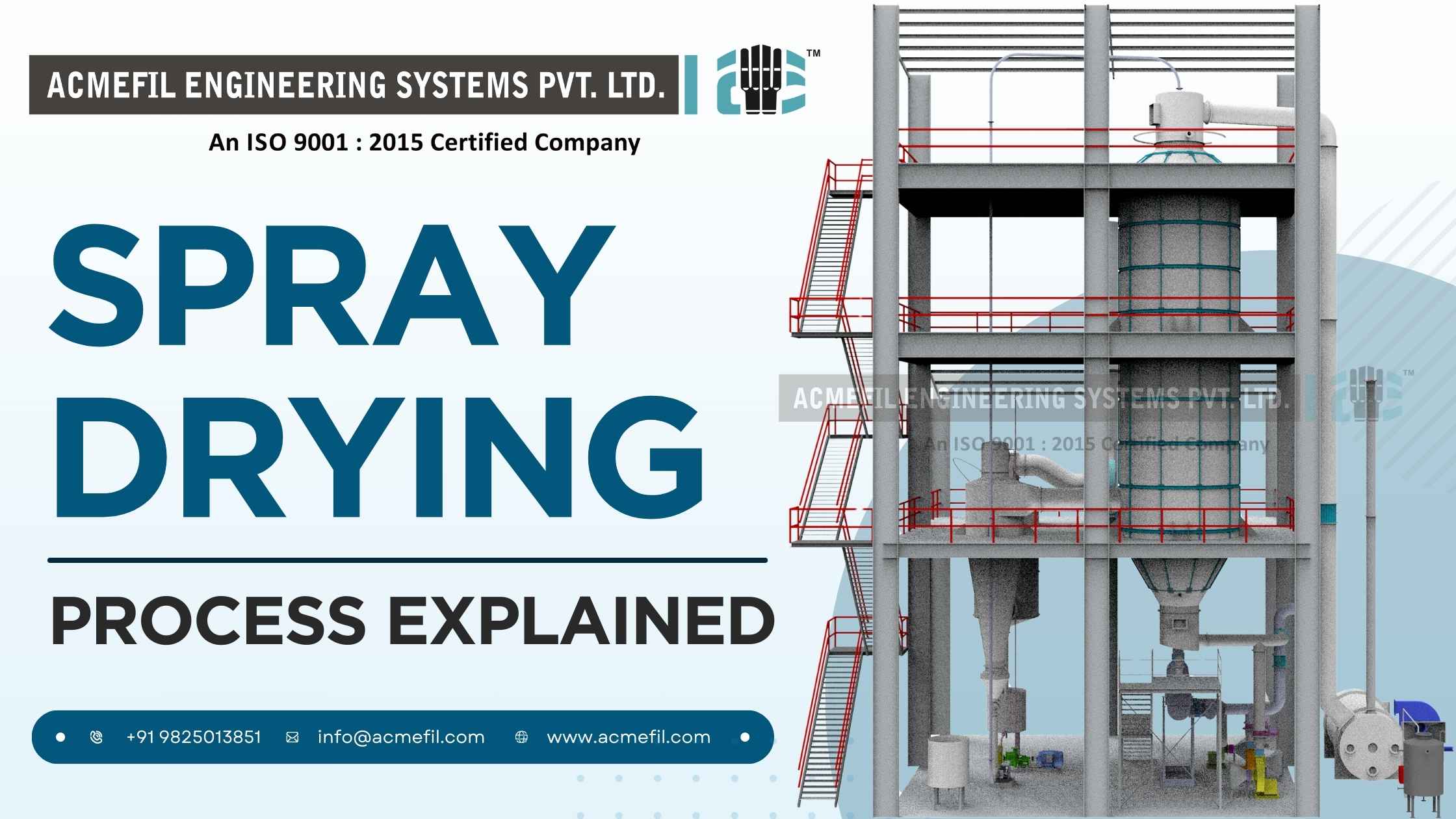
Understanding the components of a spray dryer is crucial for grasping how the process works. The main parts include:
1. Feed Pump
The feed pump delivers the liquid feedstock into the system at a controlled rate.
2. Atomizer
The atomizer converts the liquid feed into fine droplets. Common types include rotary atomizers and nozzle atomizers.
3. Drying Chamber
This is where the actual drying takes place. Hot air is introduced to evaporate the moisture from the droplets.
4. Air Heater
The air heater raises the temperature of the air to the desired level for efficient drying.
5. Cyclone Separator
The cyclone separator collects the dried powder particles from the air stream.
6. Exhaust Fan
The exhaust fan removes the moist air from the system, maintaining airflow.
Types of Spray Dryers
Spray dryers come in various designs, each suited for specific applications.
Co-current Flow Dryers
In co-current dryers, the feed and the drying air flow in the same direction. This method is suitable for heat-sensitive materials.
Counter-current Flow Dryers
Here, the feed and hot air move in opposite directions. This allows for higher drying temperatures but is not ideal for heat-sensitive products.
Mixed Flow Dryers
Mixed flow dryers combine aspects of both co-current and counter-current designs, offering flexibility in drying characteristics.
Spray Drying Process Steps
The spray drying process can be broken down into four main steps:
1. Feed Preparation
The liquid feed is prepared and homogenized to ensure consistency.
2. Atomization
The feed is atomized into fine droplets using an atomizer.
3. Drying
The droplets are exposed to hot air in the drying chamber, where moisture evaporates rapidly.
4. Powder Recovery
The dried particles are collected using cyclone separators or bag filters.
Applications of Spray Drying
Spray drying is utilized across various industries due to its efficiency and ability to produce uniform particles.
Food Industry
- Dairy Products: Production of milk powder and whey protein.
- Beverages: Instant coffee and tea powders.
- Flavorings: Drying of liquid flavors into powders.
Pharmaceutical Industry
- Medications: Creation of fine powders for inhalers.
- Encapsulation: Protecting sensitive drugs within a powder matrix.
Chemical Industry
- Detergents: Production of powdered detergents.
- Catalysts: Drying of catalyst particles for industrial processes.
Advantages of Spray Drying
- Rapid Drying: Quick moisture removal minimizes product degradation.
- Uniform Particle Size: Produces consistent and controllable particle sizes.
- Scalability: Suitable for both small-scale and large-scale production.
- Versatility: Can handle a wide range of materials, including heat-sensitive ones.
Challenges and Considerations
While spray drying offers numerous benefits, there are challenges to consider:
- Energy Consumption: High energy requirement for heating air.
- Equipment Cost: Initial investment can be significant.
- Product Loss: Potential for product loss during powder recovery.
- Complexity: Requires skilled operation and maintenance.
Future Trends in Spray Drying Technology
Advancements in technology are addressing current challenges:
- Energy Efficiency: Development of systems that reduce energy consumption.
- Process Optimization: Use of computational modeling to improve efficiency.
- Nano Spray Drying: Producing nanoparticles for advanced applications.
- Automation: Integration of automated controls for consistent production.
Conclusion
The spray drying process is a vital technology in modern manufacturing, offering efficient and scalable solutions for converting liquids into powders. Its applications span industries, from creating your morning instant coffee to producing life-saving medications. Understanding this process opens doors to innovation and improvement in product development and manufacturing.
Looking for cutting-edge solutions in industrial drying technology? Acmefil Engineering Systems Pvt Ltd. offers state-of-the-art spray drying equipment designed to transform your production process. With decades of expertise, we specialize in creating customized drying systems that meet the unique needs of industries ranging from food and pharmaceuticals to chemicals and ceramics. Our commitment to innovation and quality ensures that you receive efficient, reliable, and cost-effective solutions. Partner with Acmefil to elevate your manufacturing capabilities and achieve unparalleled product consistency and quality.